
Psychedelic preparation is more than packing a bag or reading a checklist. It’s about shaping the inner and outer conditions that will support your journey. This is what we refer to when we talk about set and setting, and these lie at the heart of every safe and meaningful psychedelic experience.
Good psychedelic preparation is not about trying to control the psychedelic journey. Instead, it’s about feeling grounded enough to meet whatever arises. It supports trust, reduces anxiety, helps deepen insight, and creates a foundation for healing.
Set & Setting: The Foundation of a Psychedelic Experience
Set refers to your mindset: your emotional state, expectations, intentions, and the personal history you bring into the experience.
Setting refers to your environment: the physical space, the people supporting you, and the overall atmosphere.
Before a retreat, it helps to ask yourself:
- What is my intention for the experience?
- Am I open to discomfort?
- Am I seeking to avoid something?
Research consistently points to set and setting as the major factors influencing psychedelic experiences — often more than the substance itself [3, 5].
The environment also matters deeply. A quiet, safe, warm and comfortable space helps you relax. Trust in the sitters or facilitators who are accompanying you helps you let go. Having someone present who can support you if emotions become intense creates safety, from which it becomes possible to go even deeper into the experience.
Set and setting do not guarantee a “good” experience, but they shape your ability to trust the process.
Intention versus Expectation
Intention is not about trying to force a certain outcome. It’s about gently reflecting on what you hope to explore.
Helpful intentions are open statements that often sound like:
- “I want to understand my anxiety.”
- “I want to open my heart.”
- “I want to learn how to let go.”
Intentions give the experience direction without closing it down.
Expectations, on the other hand, can create resistance. If things don’t unfold the way you imagined, you may struggle to accept what is happening. Intentions guide, but expectations constrain.
Psychedelic studies consistently show that flexible, open attitudes contribute to better outcomes than rigid or controlling mindsets [2].
Before the journey, set an intention. And once the experience begins, let go of it, allowing the journey to go where it needs to go.
Emotional Readiness and Preparing the Nervous System
Psychedelics tend to amplify what is already inside us. This can include beauty, joy, and softness. But it can also be anxiety, grief, anger, or memories we’ve avoided.
Preparing emotionally helps you face whatever comes up with more groundedness. Simple ways that help during psychedelic preparation include connecting to your body, giving space to emotions, and reducing stimulation.
Connection With Your Body
This helps you sense what you’re feeling before you enter an expanded state and be able to stay in touch with it throughout the experience. Activities that aid in this include meditation, body scans, gentle stretching or yoga, and breathwork.
Giving Space to Emotions
During psychedelic preparation it helps to shift focus from the intellect to the emotional as well, in order to allow more openness and healing. Activities that help to give more space to emotions include journaling, creative expression, and talking to someone you trust.
Reducing Stimulation
When preparing for a psychedelic journey, it helps to reduce other forms of stimulation so you are more in tune with the psychedelic experience itself without any “contamination” by other factors. In the days before, it is thus advisable to reduce caffeine and other stimulants. It helps to spend less time in front of screens, limit stressful conversations and create pockets of quiet and reflection.
This helps your nervous system be more regulated and feel safer, making it easier to let go during the psychedelic journey.
Ask yourself honestly:
- Do I feel ready enough for this?
- If I meet difficult emotions, who can support me?
Being prepared doesn’t remove challenges – it builds your capacity to navigate them.
Creating a Special Space
When stepping into a psychedelic experience, your physical environment matters. Your space can signal to your mind that you’re stepping into something meaningful.
Consider preparing the room with clean, uncluttered surfaces. Set up soft or natural lighting. Have a safe place to lie down and prepare some cosy blankets and cushions. Also, ensure that you use music that supports inward exploration.
At the same time, avoid distractions like social media, loud noises, unpredictable visitors, or people who don’t make you feel safe.
This sends a clear message to your system: This is an important moment. This is time to go inward.
A well-prepared space helps the mind relax, and a relaxed mind is more open to whatever comes up.
When Not to Journey
One of the most important aspects of psychedelic preparation is knowing when not to take psychedelics.
Pause or postpone if you are in the middle of a mental health crisis, experiencing suicidal thoughts, or feeling emotionally overwhelmed. The same applies if you are under severe pressure or instability, or if you are unable to access proper support.
This work is not about pushing through difficulty. It’s about meeting yourself honestly.
If something in you says “not now,” listen to yourself.
This is why stability and support are seen as prerequisites for psychedelic-assisted therapy [4] and for psychedelic retreats.
Preparing for Challenging Experiences
Preparation is not about trying to avoid discomfort. It’s about learning how to meet it safely.
Difficult moments during the psychedelic trip can lead to profound insight and change, sometimes more than the pleasant ones. Fear, sadness, confusion and emotional intensity are not signs that something is going wrong; they are part of the process.
If challenging emotions arise, it helps to follow these simple guidelines:
- Notice and stay connected to your breath.
- Ground yourself in your body through awareness, touch or gentle movement.
- Allow the emotion to come up rather than fighting it.
- Remind yourself: This will pass.
- Stay connected to the person accompanying you, the music, or an object that grounds you.
Support makes a huge difference. Skilled facilitators, trained sitters, or a trusted companion help you feel held through the waves of the psychedelic journey. Research has in fact shown that when people are supported properly, challenging experiences often become meaningful and therapeutic rather than destabilising [1].
You can read more about challenging experiences with psychedelics in the fourth video of this series.
Closing Reflections
Good preparation helps you open the door gently, rather than forcing it. It helps you trust yourself, trust the process, and navigate whatever comes up with more clarity and compassion.
Start slow. Stay grounded. Give yourself space. And listen closely.
The journey begins long before taking the psychedelic substance.
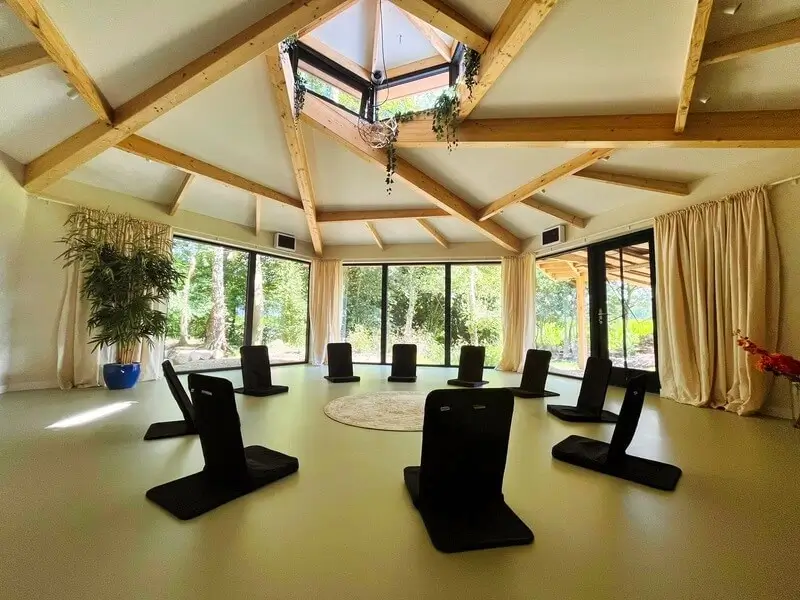
Psilocybin Retreat in the Netherlands
TAKE THE FIRST STEP
Get the monthly email with tools to help you live a more conscious life.
Just useful stuff – we promise!
Contact Us
Email: contact@consciousgrowth.eu
Legal Note
Taking psychedelic truffles in our retreats is subject to a registration process. Please consult the FAQs for a list of contraindications. Conscious Growth does not offer therapy or treatment for physical or mental health conditions during the retreats.
In accordance with Dutch law, we use exclusively psilocybin truffles that are legal across the country. You can read more about the legal aspect here.
APPLY for a Retreat
Book an Introductory Call
Our Retreats
Frequently Asked Questions
Resources
Terms and Conditions
Privacy Policy